domingo, 7 de mayo de 2023

Black-crowned Night Heron


Black-crowned Night Heron (Nycticorax nycticorax)

The Black-crowned Night Heron (Nycticorax nycticorax) used to be a fairly regular passage migrant to La Palma, but seems to have become less frequent in recent years. Moreover, the 2021 volcanic eruption destroyed several of the irrigation ponds formerly frequented by this species.

Black-crowned Night Heron (Nycticorax nycticorax), adult in breeding plumage

The present bird was first spotted near the Dos Pinos reservoir (Los Llanos de Aridane) as it briefly flew overhead, and then landed out of sight behind a group of houses. I located it on the rim of a tiny irrigation pond, in semi-urban surroundings, amid a cluster of buildings and greenhouses. The present photos were all taken over a wall, shooting through mesh fencing towards the private pond.
 

Since the water level was low, the upper rim of the pond was unsuitable as a perch for catching prey. The heron therefore crept around to the other side and descended a few rungs of the metal access ladder.

Black-crowned Night Heron (Nycticorax nycticorax) tiptoeing around the pond.

Black-crowned Night Heron (Nycticorax nycticorax) perched on the access ladder, close to the water surface.


I watched the heron for about an hour, as it switched positions on the lowest rung and made a few tentative probes towards the water, but no prey items were caught during my presence. Remarkable in fact, that the bird remained undisturbed for so long at such a location.


viernes, 14 de abril de 2023

Ruddy Shelduck

Ruddy Shelduck (Tadorna ferruginea)

I photographed two Ruddy Shelduck (Tadorna ferruginea) in an irrigation pond in Las Martelas (Los Llanos de Aridane) yesterday evening, April 13. This was my first visit to the area for about one month, so I have no idea how long these two birds have been present, but it seems they have already been reported to SEO/Birdlife on Tenerife. 
 

Ruddy Shelduck (Tadorna ferruginea) + domestic Muscovy Duck (Cairina moschata) with chick 

The Ruddy Shelduck (Tadorna ferruginea) is a "recent coloniser" of the island of Fuerteventura, where it continues to breed since first reported in spring 1994. Given the absence of older records, the appearance of this species on Fuerteventura was originally suspected to be the result of accidental escapes, but evidence now points to a natural Western Saharan origin for the island's resident breeding population (Atlas de las Aves Nidificantes en el Archipiélago Canario, SEO/Birdlife).


In addition to the island of Fuerteventura, there have been isolated sightings on Lanzarote, Gran Canaria and Tenerife, but none, to the best of my knowledge on La Palma, La Gomera or El Hierro. The two birds presently on La Palma might originate from Fuerteventura, or equally well, from the not-so-distant African continent. The strong easterly winds experienced recently on La Palma could have affected the flight paths of these, and other migratory birds currently present on the island.

Ruddy Shelduck (Tadorna ferruginea) + domestic Muscovy Duck (Cairina moschata), and following images below:

While accidental escape from a private collection or local zoo theoretically cannot be entirely discounted, the birds' cautious behaviour argues against previous domestication or captivity. 


One of the two birds has a faint dark neck band, so is obviously a male. The other bird is considerably smaller, lacks the neck band, and has much more white on the neck and throat, indicative of a female. As this appears to be a pair, a late attempt at breeding could possibly ensue.

lunes, 7 de noviembre de 2022

Great Cormorant


Great Cormorant (Phalacrocorax carbo)

The immature Great Cormorant (Phalacrocorax carbo) first spotted on Oct 15 was still present on Nov 6. The bird can now be seen both at the irrigation ponds in Las Martelas, and at the Dos Pinos reservoir, both in the Los Llanos de Aridane municipality.

Great Cormorant (Phalacrocorax carbo) and avian spectators

On Oct 18 I was able to photograph the Cormorant taking off, a fairly strenuous process in which the bird splashes across the surface in a series of jumps before finally getting airborne. 

Great Cormorant (Phalacrocorax carbo) almost airborne

This interesting migrant has no difficulty feeding on the island as several irrigation ponds and reservoirs contain fish. However, despite having seen the bird dive and swim underwater, I have yet to observe it surfacing with prey. This could be due to the prey items being small enough to be swallowed underwater, or to a lack of fishing expertise. Further observation is required.

Great Cormorant (Phalacrocorax carbo) in flight


Great Cormorant (Phalacrocorax carbo) taking off

Great Cormorant (Phalacrocorax carbo) taking off

sábado, 15 de octubre de 2022

First half of October

 The first two weeks of October have seen the arrival of a number of interesting migrants, including the two species shown in the present post:

Northern Wheatear (Oenanthe oenanthe ), 1w

Sightings of Northern Wheatear (Oenanthe oenanthe) are almost annual on the island. Both adult and juvenile birds have turned up at several unpredicatable locations in recent years, sometimes in small groups. 

Northern Wheatear (Oenanthe oenanthe) 1w

The present individual was discovered by chance as I walked around the Dos Pinos (Los Llanos de Aridane) reservoir on Oct 9. It was perched 5 or 6 metres above me, offering an unusual perspective of a species typically observed close to the ground.

A noteworthy find on Oct 15 was the bird shown here:

Great Cormorant (Phalacrocorax carbo) imm.

The Great Cormorant (Phalacrocorax carbo) is described as an irregular winter visitor to the Canary Islands in the "Fieldguide to the Birds of Macaronesia" (Lynx Edicions, 2011).

Great Cormorant (Phalacrocorx carbo) exploring the pond

There have been several records on La Palma, from both coastal locations and freshwater habitats. Since some of the irrigation ponds in Las Martelas (Los Llanos de Aridane) are stocked with carp or tilapia, piscivores are able to find easy prey.

Great Cormorant (Phalacrocorax carbo) leaving the water

Initially seen standing on the concrete ramp visible in the first photo above, the bird eventually swam underwater and reemerged on the far side of the pond without making a catch. It then settled to dry off, apparently in no hurry for a second attempt.

Great Cormorant (Phalacrocorax carbo) drying off

Also seen in the same area in the last couple of weeks:
9 x Cattle Egret (Bubulcus ibis), a sizeable group for the island, plus small numbers of common waders such as Redshank (Tringa totanus), Curlew Sandpiper (Calidris ferruginea), Greenshank (Tringa nebularia) and Common Sandpiper (Actitis hypoleucos). 
1-2 Spoonbills (Platalea leucorodia) have been roosting by day at the Dos Pinos reservoir, but probably feed elsewhere.

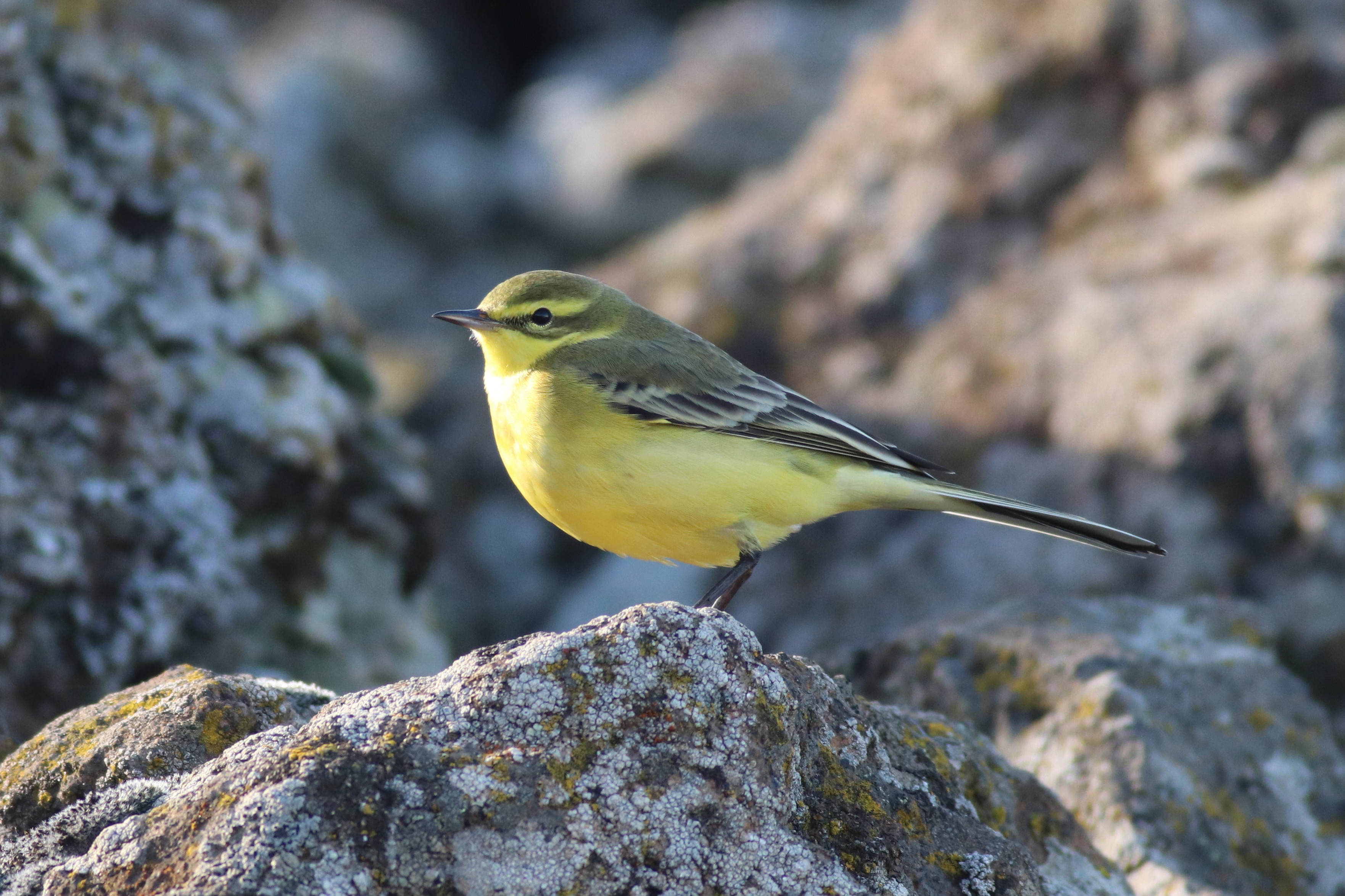
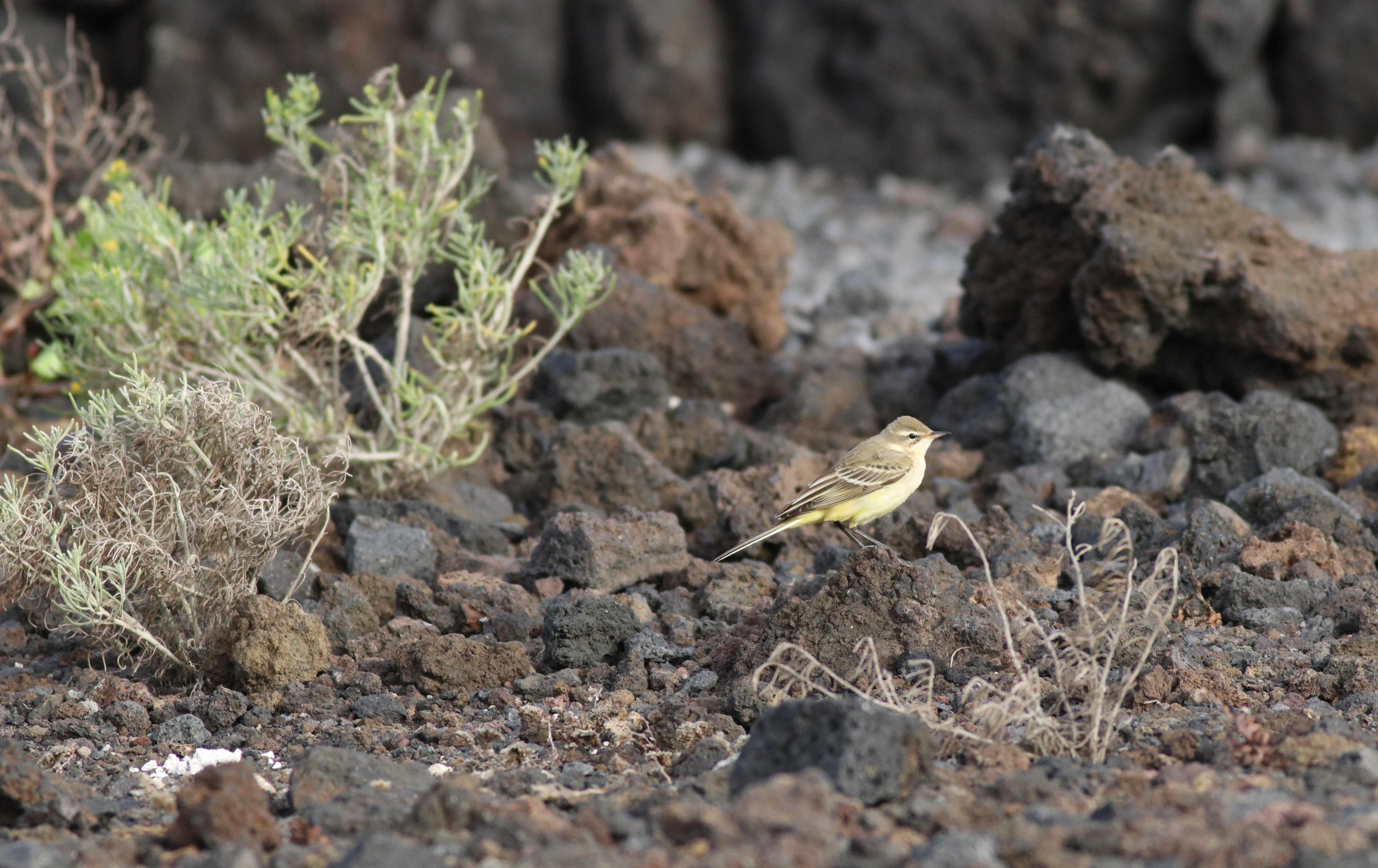
Elsewhere on the island, at the saltpans in Fuencaliente, the number of Yellow Wagtails (Motacilla flava) was up from one, to two birds on Oct 7.

domingo, 2 de octubre de 2022

September-October highlights

 In addition to the birds featured in the previous two posts, September and early October have also seen the arrival of the following species:

1. Common Redshank (Tringa totanus), one at Las Salinas (Fuencaliente) and two at the airport pools (Mazo):


One of two Redshank (Tringa totanus) feeding at the airport pools on Oct 2


Redshank (Tringa totanus)

Redshank (Tringa totanus)

Redshank (Tringa totanus)

A regular seasonal migrant to La Palma, the Redshank (Tringa totanus) doesn´t qualify as an oustanding find, but I was pleased to get pictures of the bird feeding on marine worms. Below it is shown enjoying  another tasty meal on Sep 9:

The airport pools seem to offer a reliable food supply to visiting waders like the Redshank (Tringa totanus)

I was tipped off about the next two species by Tim Brereton, who was guiding a Naturetrek group on the island. They discovered two Willow Warblers (Phylloscopus trochilus) and a Yellow Wagtail (Motacilla flava) at the saltpans in Fuencaliente on Sep 27, and a group of 7+ Yellow Wagtails (Motacilla flava) on the farmland in the high part of El Paso (Llano de Las Cuevas) on Sep 29.

2. Willow Warbler (Phylloscopus trochilus)

I managed to locate one of the two Willow Warblers (Phylloscopus trochilus) on Sep 28. The bird was foraging for insects on the stone walls:

Willow Warbler (Phylloscopus trochilus) at the saltpans in Fuencaliente


Willow Warbler (Phylloscopus trochilus)

This species has turned up at the saltpans before, and at the irrigation ponds in Las Martelas (Los Llanos de Aridane), but cannot be considered a regular visitor to the island. Or perhaps many birds just go undetected, especially if they settle in wooded habitat or gardens.


3. Yellow Wagtail (Motacilla flava)

On Sep 30 I found a small group of approximately 4 individuals at the same location where Tom Brereton and Naturetrek had observed their 7+ birds. Significantly, this was a small field containing livestock, ideal terrain given the species´ marked habit of feeding at the feet of grazing animals:

Yellow Wagtail (Motacilla flava) in Llano de Las Cuevas (El Paso), Sep 30

Yellow Wagtail (Motacilla flava) in rather different surroundings. No livestock here: this is the arid area adjacent to the saltpans in Fuencaliente.

Another shot at the same location, together with a Grey Wagtail (Motacilla cinerea) for comparison.


viernes, 23 de septiembre de 2022

Ardeidae


Part of the group of herons, with the two Cattle Egret (Bubulcus ibis) visible in the centre

After a week´s absence from the island, I returned to Las Martelas this morning to find a mixed group of herons; the Pectoral Sandpiper (Calidris melanotos) featured in my previous post was nowhere to be seen.


The assembly of Ardeidae gave the impression of being a group of recently-arrived birds, made up of 14 Little Egret (Egretta garzetta), 2 Cattle Egret (Bubulcus ibis), a handful of Grey Herons (Ardea cinerea) and a single Squacco Heron (Ardeola ralloides).


Part of the group of Ardeidae, with the Squacco Heron (Ardeola ralloides) in the foreground


Part of the group of Ardeidae, with the Squacco Heron (Ardeola ralloides) in the foreground


Squacco Heron (Ardeola ralloides)

Of the four species, the Squacco Heron (Ardeola Ralloides) appears least regularly on La Palma, followed by the ubiquitous Cattle Egret (Bubulcus ibis), which breeds on the island of Lanzarote. Both the Little Egret (Egretta garzetta) and Grey Heron (Ardea cinerea) can be observed virtually all year round.

Records of Black-crowned Night Heron (Nycticorax nycticorax), Great White Egret (Egretta alba), Purple Heron (Ardea purpurea), and Little Bittern (Ixobrychus minutus) also exist for the island, though all but the first-named are very infrequent visitors.


domingo, 11 de septiembre de 2022

Pectoral Sandpiper


Pectoral Sandpiper (Calidris melanotos)

I found this interesting wader in an irrigation pond in Las Martelas (Los Llanos de Aridane) this morning, Sep 11. 


Pectoral Sandpiper (Calidris melanotos)

The Pectoral Sandpiper (Calidris melanotos) breeds in the Arctic tundra, from Siberia to the Hudson Bay in Canada, and winters in South America, and to a lesser extent in SE Australia, Tasmania and New Zealand (Farmer et al, 2020).

Records in Europe, relatively numerous and on the increase, have traditionally been regarded as vagrants from North America, but it seems possible that a large proportion of the birds could come directly from Siberia, on a south-westerly course towards sub-Saharan Africa (Alström et al, 1991; Lees and Gilroy, 2004), perhaps due to a westward expansion of the species' breeding area (Farmer et al, 2020). Indeed, the species might be breeding occasionally in the far north of Europe (Keller et al, 2020).


Pectoral Sandpiper (Calidris melanotos) showing sharply demarcated gorget of streaks coming to a point in centre of breast, a diagnostic fieldmark

In Spain, records became annual from 1980 onwards and by 2015, when the species officially ceased to be classed as a rarity, the total had reached 382, of which 83% stemmed from the mainland plus the Balearic Islands, and 17% from the Canary Islands (Gil-Velasco et al, 2017).


Pectoral Sandpiper (Calidris melanotos) from rear,  with Common Sandpiper (Actitis hypoleucos)

Before the species was "declassified" from the rarity list, I notched up a total of 7 records on La Palma, mostly in the month of September, and in all but one case at the irrigation ponds in Las Martelas, with just one record from Las Salinas (Fuencaliente).


Pectoral Sandpiper (Calidris melanotos) 

My own observations thus reflect the general tendency throughout Spain, where autumn records outnumber those in spring. and many of the birds are juveniles, as the one shown here.


Pectoral Sandpiper (Calidris melanotos)